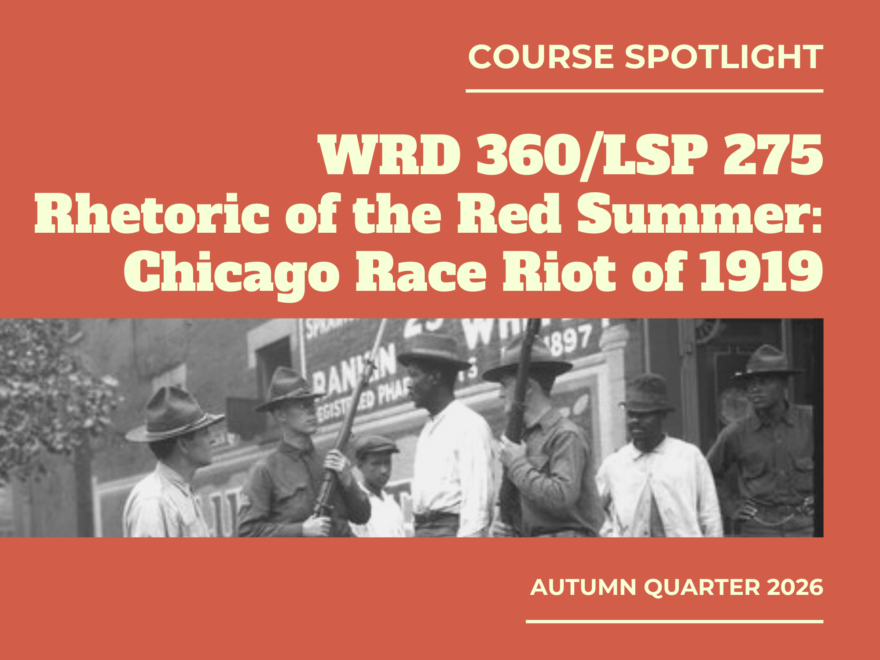
Chicago is a city with a rich and complicated history, and this history still impacts us today. Go deep into one aspect of it and learn to connect it to our present with WRD 360/LSP 275, Rhetoric of the Red Summer: Chicago Race Riot of 1919 with Professor Salli Berg Seeley.
Why take this course?
One of the special things about this course is that it will give students a look into the different forms civic engagement can take.
Professor Berg Seeley has been teaching Chicago literature for over a decade. This drew her attention to 1919, a book by Chicago poet and sociologist Eve Ewing in recognition of the 100-year anniversary of the Red Summer. “I thought that 1919 would be a great text to include in this class because alongside readings on the history and analysis of the events, this offers a much more creative and personal perspective.” Students will be able to engage with these poems in addition to a compilation of journalistic accounts from the era by poet and journalist Carl Sandburg, among other texts, to gain a fuller picture of what civic engagement can look like.
Course format and projects
Week to week, this course will primarily involve small and large group discussion. Students will annotate the different readings and then meet with their classmates to share their opinions and responses.
Professor Berg Seeley says that the final project will give students room for creativity and allow them to play to their strengths: they can make connections to the course material by writing analytical essays, making videos, writing poetry, and so on. “I want a personal output, something that interprets and comes out of the students’ authentic responses to what we’ve been reading and talking about.”
Course modality
This course will be offered in-person. The class will have students from WRD, and since it’s cross-listed as LSP 275, students from across DePaul’s different departments will attend as well.
Takeaways
“Civic engagement matters: it is incumbent on all of us to be participatory citizens, aware of what’s happened in the past and what we can do in the future, to remain involved in civic society in some way,” says Professor Berg Seeley. “Most importantly, words matter. They have the power to heal and hurt. Let’s use them wisely.”
Conclusion
If you’re looking to explore important aspects of local history or gain perspective on civic involvement, WRD 360/LSP 275 will be a great addition to your autumn quarter. Log in to CampusConnect and add it to your schedule now!